
Summary of Hanover’s 2025 Trends in K–12 Education Report
Posted by Steven M. Yanni, Ed.D. on 17th Mar 2026
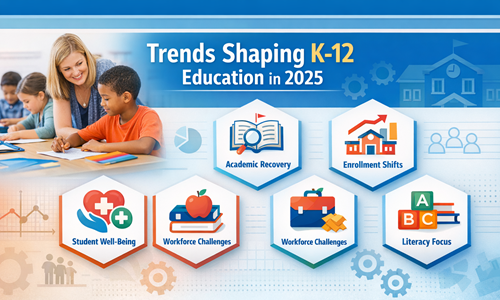
The 2025 Hanover Research report paints a picture of a school system in motion—shaped by shifting political landscapes, tightened budgets, fluctuating enrollments, and evolving expectations for teaching and learning. Six key themes emerge, each revealing how districts are adapting to pressures while keeping their focus on student success.
First, academic recovery remains uneven. Many students, particularly those from low-income backgrounds, English learners, and those receiving special education services, continue to struggle to close the gaps that widened during the pandemic. Districts are responding by taking a closer, more systematic look at how instruction is delivered, auditing classroom practices, and, in some cases, rethinking assessment models altogether.
Second, enrollment patterns have become unpredictable. While some districts are growing, others are shrinking, often due to the rise of school choice, homeschooling, and lingering attendance issues. In response, leaders are turning to more deliberate community engagement, outreach campaigns, and partnerships to restore public confidence and encourage families to stay.
The third trend reflects a sharpened emphasis on using data to guide spending. With federal COVID-relief funds gone, districts face difficult decisions about what programs to keep. Increasingly, administrators are relying on program evaluations, stronger budgeting processes, and clearer measures of return on investment before committing resources.
The fourth theme centers on student well-being. Rising rates of anxiety, depression, bullying, and chronic absenteeism are prompting schools to invest more in mental health services, strengthen school climate initiatives, and find new ways to keep students connected and engaged—often while navigating debates over social-emotional learning and digital device policies.
Fifth, the workforce is under strain. Teacher shortages, high turnover, and heavy workloads have made it essential to build leadership skills across all levels of staff. Many
districts are expanding professional development options, mentoring programs, and opportunities for teachers and administrators to contribute to decision-making.
Finally, literacy continues to draw national attention. The “Science of Reading” movement has influenced legislation in most states, leading to more structured, research-based approaches to reading instruction. Schools are balancing these mandates with the need for flexibility, targeted interventions, and professional learning that ensures teachers can confidently meet diverse student needs.
Taken together, these trends describe a field in transition. Schools are being asked to do more with less, to innovate without losing sight of foundational skills, and to build systems that are both data-informed and deeply human. The report suggests that while challenges are real and persistent, so too is the capacity of educators to adapt, collaborate, and find new ways to serve their students well.
 Recently Viewed