
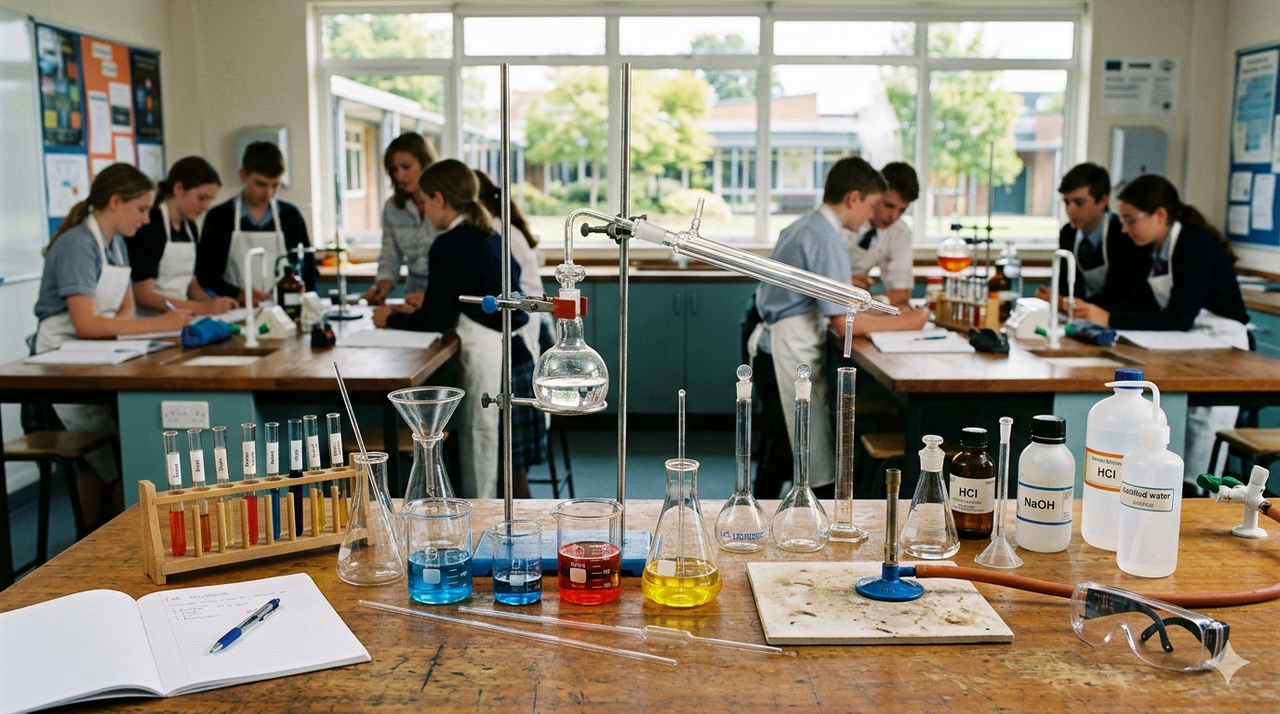
Lab Beakers and Glassware: Quality Chemistry Tools for Schools
18th Mar 2026
Lab Beakers are basic chemistry tools used in school labs to mix, heat, and observe chemical reactions safely. In classrooms, the quality of glassware matters a lot. Strong materials prevent cracks, clear markings help with measurements, and reliable tools keep students safe during experiments.
Schools run many experiments during the year. That means equipment must handle repeated use. Weak glassware can break, lose markings, or give poor measurements.
At Geyer Instructional, we supply science equipment designed for real classroom use. Our goal is simple. We provide glassware that teachers can trust for daily lab activities.
Before choosing lab equipment, it helps to understand what these tools do and why they matter in school laboratories.
What Are Lab Beakers and Glassware Used for in School Chemistry Labs?
Lab glassware is a group of heat-resistant containers used to mix, heat, measure, and store chemicals during experiments. These tools allow students to observe reactions and practice basic laboratory methods.
In most classrooms, students use glassware to:
- Mix solutions
- Heat liquids
- Measure approximate volumes
- Pour chemicals safely
- Observe reactions clearly
Science classes depend on laboratory beakers and other tools because they make experiments easier to control and understand.
When students can see chemical reactions clearly, learning becomes more hands-on and engaging. That’s why durable glassware is a key part of any chemistry lab.
Which glassware tools do students use most often?
Students work with several common tools during experiments:
- Beakers
- Graduated cylinders
- Erlenmeyer flasks
- Test tubes
- Stirring rods
- Pipettes
Each tool has a purpose. For example, beakers help mix and heat liquids, while graduated cylinders measure volume more precisely.
These tools help students practice observation, measurement, and safe handling of chemicals. As teachers know, good equipment makes these lessons smoother.
Once schools understand the tools they need, the next step is choosing the safest material.
Why Do Schools Prefer Borosilicate Glass Beakers?
Material quality plays a big role in lab safety.
Borosilicate glass has a thermal expansion coefficient of about 3.3 × 10⁻⁶ /K, which allows it to handle rapid temperature changes safely. Because of this property, it is widely used for glass beakers in classrooms and research labs.
The key reason is something called thermal expansion.
This glass expands very little when temperatures change. This means it can handle sudden heating or cooling without cracking.
In a classroom, the biggest risk is not only dropping a beaker. Sometimes students pour hot water into a container that was sitting on a cold lab bench. Ordinary glass may crack instantly. Borosilicate glass handles this change safely.
Geyer Instructional uses 3.3 borosilicate glass because it provides:
- Strong heat resistance
- Better durability
- Safer performance during experiments
Material quality matters, but durability across a full school year is also important.
How Durable Should School Lab Glassware Be?
School lab equipment faces constant use. Students handle it, teachers wash it, and it moves between classes all day.
Common challenges include:
- Repeated washing
- Dishwashers
- Chemical exposure
- Frequent handling by students
Because of this, measurement markings must last. Graduations are the measurement markings printed or etched on glassware to show liquid volume.
If markings fade, students lose an important reference for experiments.
Our scientific beakers include double-scale graduations with fired-on enamel markings. These markings stay visible even after repeated washing. Over time, this durability makes a big difference. Schools need equipment that lasts through many semesters, not just a few months.
However, not every glassware product sold online meets classroom standards.
What Makes “School-Grade” Lab Glassware Different From Generic Glassware?
Teachers often compare lab suppliers before placing an order. The difference between general retail glassware and school-grade equipment is significant.
Below is a simple comparison.
Comparison Table- Generic vs School-Grade Glassware
|
Feature |
Generic Glassware |
Geyer Instructional Glassware |
|
Material |
Soda-lime glass |
3.3 borosilicate glass |
|
Durability |
Can crack under heat |
Resistant to thermal shock |
|
Measurement marks |
Printed ink that fades |
Fired-on enamel markings |
|
Rim design |
Thin edges |
Reinforced beaded rim |
|
Temperature range |
Low tolerance |
Handles sudden heat changes |
|
Certification |
Often none |
ISO / ASTM standards |
Specialized suppliers understand classroom needs better than general retailers. School labs require equipment that stays reliable throughout the academic year.
But the beaker itself is only part of the picture. Storage and cleaning tools also matter.
What Other Lab Tools Help Protect and Maintain Glassware?
Proper care helps lab glassware last longer.
In many schools, breakage happens because of poor cleaning or storage. Simple accessories can prevent this.
Common support tools include:
- Cleaning brushes
- Drying racks
- Test tube racks
- Storage trays
- Rubber stoppers
Drying racks allow glassware to drain safely after washing. Cleaning brushes remove chemical residue without scratching the surface.
We supply these supporting tools because they protect glassware between experiments. Organized storage also prevents accidental drops during busy lab sessions. Good maintenance keeps equipment safe for students and teachers.
However, schools also need reliable ordering systems to keep their labs stocked.
How Do Schools Order Lab Glassware for the Academic Year?
Most schools follow a structured purchasing process.
A purchase order (PO) is a formal request used by schools to buy equipment within a set budget.
Typically, the process includes:
- Science department planning
- Budget approval
- Purchase order submission
- Equipment delivery before the semester starts
Geyer Instructional understands how these procurement cycles work. Schools need a consistent inventory and predictable delivery.
We support bulk ordering so teachers can plan experiments without worrying about supply delays.
Many teachers also look for complete lab setup guidance. Our guide titled Science Supplies for Teachers: A Complete Lab Setup helps schools plan equipment for a full classroom laboratory.
Reliable supply matters because teachers cannot run experiments without the right tools.
Why Do Schools Trust Geyer Instructional for Science Lab Equipment?
Geyer Instructional has served educators for decades. Our product selection focuses on classroom use, not just general laboratory supplies.
We work closely with teachers, lab technicians, and science instructors. That experience helps us choose equipment that performs well in real classrooms.
Our approach is simple:
- Provide classroom-tested tools
- Maintain consistent product quality
- Offer support when schools need guidance
If teachers have questions, they can call 800-457-3373 and speak with someone who understands school laboratories.
We believe equipment should meet the demands of daily science classes. If a product cannot handle that environment, we do not carry it. This focus helps schools run safe and effective experiments year after year.
Conclusion: Why Quality Lab Glassware Matters in Science Education
Science labs give students a chance to test ideas and observe real chemical reactions. For those lessons to work well, equipment must be reliable.
Strong glassware improves safety, keeps measurements accurate, and lasts through repeated use. When teachers can depend on their equipment, they spend less time replacing broken tools and more time teaching.
Frequently Asked Questions About Lab Beakers and Glassware
What size beakers are commonly used in school labs?
Most schools use 50 mL, 100 mL, 250 mL, 400 mL, and 600 mL sizes. These sizes allow teachers to scale experiments depending on grade level.
Are borosilicate beakers safe for heating chemicals?
Yes. Borosilicate glass can handle direct heating and sudden temperature changes. That is why it is the preferred material for classroom experiments.
How long should lab glassware last in a classroom?
High-quality borosilicate glassware can last several years when cleaned and stored properly.
What is the difference between a beaker and a graduated cylinder?
A beaker measures the approximate liquid volume. A graduated cylinder provides more precise measurements.
How should schools store glassware to prevent breakage?
Schools should use drying racks, storage trays, and test tube holders. These tools keep glassware organized and reduce accidental damage.
 Recently Viewed