
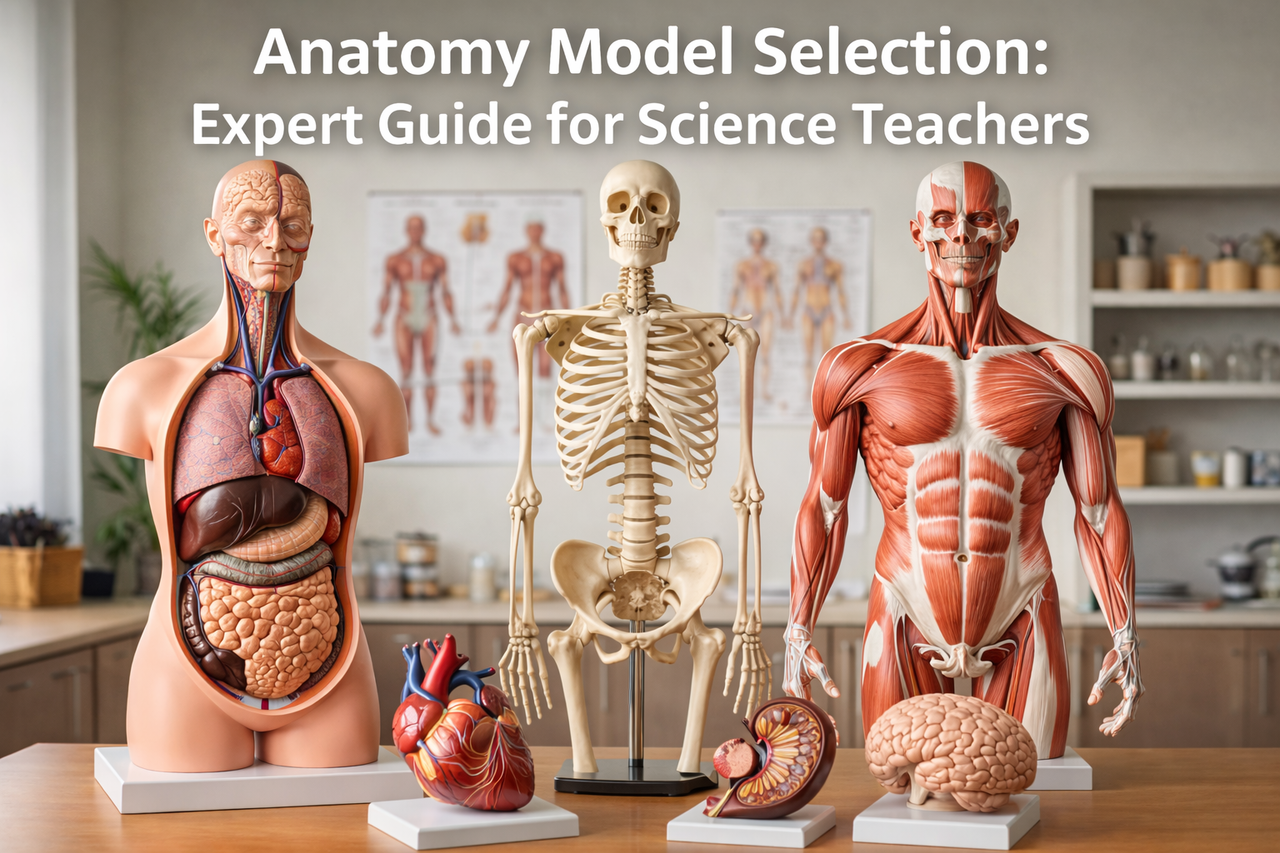
Anatomy Model Selection: Expert Guide for Science Teachers
10th Mar 2026
Choosing the right anatomy model comes down to three simple things: accuracy, durability, and the grade level you teach. When teachers use the right model, students can see body systems clearly and understand how parts connect in real life. A good model also helps students remember lessons better than flat textbook pictures.
An anatomy demonstration model is a three-dimensional teaching tool that shows the structure and function of the human body.
At Geyer Instructional Products, we’ve worked with science teachers for more than 60 years. We help classrooms choose tools that actually work during labs. This guide explains how to pick the right model for your students, what materials matter, and how to use them effectively in your science lab.
Let’s start with the most common question teachers ask when planning their classroom lab.
How Do Science Teachers Choose the Right Anatomy Model for Their Classroom?
Selecting a classroom model is not just about how it looks. Teachers need something students can use often without damage. It also needs to match the lesson plan and the grade level.
Most teachers look at three main factors:
- Purpose of the lesson – simple system overview or detailed anatomy study
- Durability – can it survive daily classroom handling?
- Student interaction – demonstration only or hands-on learning
For example, a lecture model works well for explaining body systems. However, multipart models allow students to remove organs and study them closely.
At Geyer Instructional Products, we usually suggest thinking about how students will interact with the model first. After that, choose the type that supports the lesson.
Once that goal is clear, the next step is understanding what makes a high-quality model.
What Materials Make an Anatomy Model Durable and Accurate?
The materials used in a classroom model affect how long it lasts and how realistic it looks. Science labs need models that handle repeated student use.
Why Are Plastisol Polymer Models Preferred in Science Labs?
Plastisol polymer is a flexible and strong material often used in professional models.
Compared to brittle PVC found in cheaper kits, plastisol models:
- Resist cracks and breakage
- Stay washable and weather-resistant
- Hold their shape after repeated use
Busy classrooms need tools that survive constant handling. This material works well for that.
Does Hand-Painting Improve Anatomical Accuracy?
Yes. Hand-painted models often show anatomical details better than printed versions.
A well-painted human body model can clearly show:
- Muscle attachment points
- Cranial sutures
- Bone ridges and grooves
These details help students identify structures during lab exams.
Why Are Some Models Cast From Real Specimens?
Many advanced classroom models are cast from real human bone specimens. This process keeps natural textures and accurate shapes. Students studying advanced biology benefit from seeing realistic bone structures. The shapes, openings, and surfaces match real human anatomy.
Material quality is important. However, the model must also match the age and level of the students. If you are setting up a full classroom lab, see our Science Supplies for Teachers: A Complete Lab Setup Guide.
How Should Anatomy Models Match the Grade Level Being Taught?
A model that works for college anatomy classes may confuse younger students. The key is choosing models that fit the lesson level.
What Works Best for Elementary or Middle School?
Introductory classes need simple visual tools. Anatomy plaque models work very well here.
These models usually include:
- Raised relief body systems
- Durable vacuum-formed plastic
- Wall-mount or tabletop use
They help students understand systems like:
- Circulatory
- Respiratory
- Digestive
Many plaque sets include worksheets that help teachers test student knowledge.
Which Models Work Best for High School Biology?
High school students benefit from models they can handle directly.
A multipart anatomical model allows students to remove organs and examine each part. These models make labs more interactive.
Examples include:
- Removable torso models
- Rib cage sets
- Skull models with labeled parts
Students move from simply looking at diagrams to physically studying the body.
What Do Nursing or Pre-Med Programs Use?
Advanced classes often use functional joint models.
These show movement, such as:
- Rotation
- Abduction
- Joint bending
Flexible ligaments help students see how joints move and how injuries happen.
At this point many teachers ask another question: should they choose plaque models or full three-dimensional ones?
What Is the Difference Between Plaque Models and 3D Stand-Alone Models?
Both types serve useful classroom purposes. Teachers often use them together.
|
Feature |
Anatomy Plaque Models |
3D Stand-Alone Models |
|
Primary Use |
Group discussion and quick review |
Hands-on anatomy study |
|
Durability |
Heavy vacuum-formed plastic |
Strong plastisol polymer |
|
Interactivity |
Raised tactile surface |
Removable organs and parts |
|
Instruction Aid |
Teaching guide included |
Numbered landmarks and keys |
|
Classroom Setup |
Wall mounted or desk use |
Tabletop or life-size display |
|
Best For |
Introductory lessons |
Advanced anatomy labs |
Plaque models help explain whole systems quickly. Three-dimensional models allow deeper study. In many labs, teachers use plaques for lectures and multipart models during lab activities.
Next, another important factor appears: the supplier providing the equipment.
Why Does the Supplier Matter When Choosing Anatomy Models?
Science equipment often stays in classrooms for many years. Because of this, the supplier should have experience with educational tools.
Why Has Geyer Instructional Been Trusted Since 1960?
For over 60 years, Geyer Instructional Products has worked with schools across the United States. Our catalog focuses on classroom-tested tools rather than generic imports.
Many teachers choose a medical anatomical model from our science collection because it is built for repeated classroom use.
How Do Anatomy Models Fit Into Modern STEM Curriculum?
Today’s science learning often combines physical tools with digital resources. Our models work alongside the MyStemKits curriculum. Students can study diagrams on screen and then examine the same structures in real three-dimensional form.
This combination helps students understand spatial relationships inside the body.
However, teachers also want to know about safety and ordering options.
What Safety and Purchasing Factors Should Schools Consider?
Safety always matters when students handle lab equipment.
Are Classroom Anatomy Models Safe for Students?
High-quality models meet CPSIA safety standards. This means they are tested for harmful chemicals such as phthalates.
Safe materials allow students of many ages to use models during lessons and labs.
How Can Schools Order Science Models Easily?
School purchasing often follows specific procedures. Many districts require purchase orders instead of credit cards.
At Geyer Instructional Products, schools can order using:
- Purchase orders (PO)
- Email orders
- Fax orders
We also provide free shipping on many qualifying purchases, helping science departments stay within budget.
Once the models arrive, teachers also need reliable support.
What Support Should Teachers Expect After Buying a Model?
A classroom model should last for many years. However, teachers sometimes lose parts or need replacement guides.
At Geyer Instructional Products, educators can contact real staff members who understand school labs. Our team helps locate replacement pieces or documentation if needed.
This support helps teachers keep classroom models usable for many years. A durable anatomical study model can stay in service for a decade or longer when properly maintained.
Reliable tools help teachers build stable science labs that serve multiple grade levels.
Before choosing a model, teachers often have a few final questions.
Frequently Asked Questions
What is the most useful anatomy model for a biology classroom?
A multipart torso model works well for many lessons. It shows several body systems and allows students to remove organs for closer study.
Are anatomy models better than textbook diagrams?
Yes. Research in anatomy education shows that three-dimensional models help students understand spatial relationships better than flat images.
How long do classroom anatomy learning models usually last?
High-quality plastisol models can last 10–15 years with proper care and storage.
Should schools buy one large model or several small ones?
Many teachers prefer a combination. A large demonstration model works well for lectures, while smaller sets allow students to work in groups during labs.
Conclusion
The right anatomical replica can turn a simple biology lesson into a clear visual experience. Students can see how organs connect, how bones fit together, and how body systems work.
When teachers focus on durability, accuracy, and grade level, they choose tools that support long-term learning.
We’ve spent decades helping schools build effective science labs. From classroom plaques to multipart skeleton models, the goal stays the same: give teachers reliable tools that help students understand the human body clearly.
 Recently Viewed