
The Grant Money Trap: STEM Kits That Never Leave the Box
5th Aug 2026
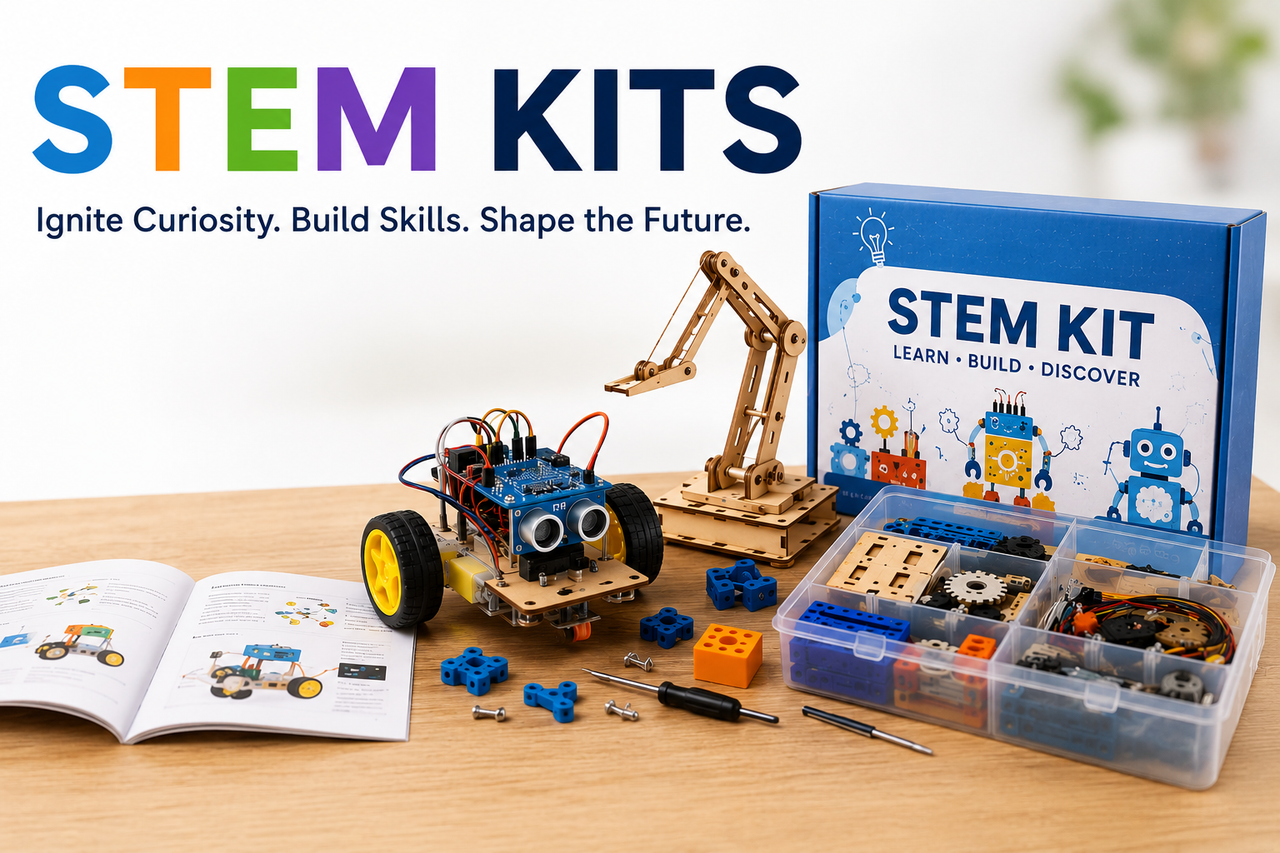
Schools can sometimes feel pressure to propose highly visible technology purchases because they photograph well, demonstrate innovation, and stand out in competitive grant applications. Unfortunately, those purchases don't always become the STEM education kits teachers use most often in everyday instruction.
We see the pattern repeat across schools every year. A robotics kit arrives with an impressive price tag, gets used twice during the observation week, then disappears into a cabinet. A set of graphing whiteboards or balance scales comes out every week for the rest of the year, at a fraction of the cost.
Schools often compare durability, replacement parts, and curriculum alignment before purchasing. These are the same questions our team helps educators answer every day, helping educators choose STEM education kits that support long-term classroom use rather than one-time activities.
Why Do Grant-Funded STEM Kits End Up in the Supply Closet?
Grant-funded kits get shelved when they demand more setup time than a lesson can spare or when they only serve one narrow activity instead of a full unit. Lay the two approaches side by side, and the pattern is easy to spot.
| Purchasing Dimension | Over-Engineered Trend Kits | Versatile Hands-On STEM Tools |
|---|---|---|
| Teacher Prep Time Required | High (1-2 hours per lab charging batteries, updating firmware, managing logins) | Minimal (about 5 minutes to unpack reusable manipulatives or measurement gear) |
| Curriculum Integration | Standalone, highly specialized activities | Mapped directly to core standards like NGSS, TEKS, and Common Core Math |
| Durability & Longevity | Fragile plastic parts, tiny proprietary cables, easily lost components | Durable construction designed for repeated classroom use |
| Student Inclusivity | One or two students control the tablet while the rest of the group watches | Collaborative sets where every learner holds, measures, and builds |
Once you see the columns side by side, it's hard to unsee. Kits with extensive setup requirements or limited instructional flexibility are often used less frequently after their initial implementation. STEM kits for classrooms built around simple, reusable tools tend to stay in rotation for years, not months.
What Actually Causes Kits to Become "Closet of Shame" Clutter?
Why Does Battery and Software Setup Kill Lesson Momentum?
If an activity needs charged batteries, updated firmware, and a Wi-Fi login before the bell rings, most teachers will quietly go back to a paper-and-pencil lab instead. That's not laziness; it's math. A 45-minute period doesn't leave room for 15 minutes of troubleshooting a login screen.
Why Do Kits Get Sidelined When They Don't Map to Standards?
We've talked with teachers who describe the same disappointment with educational STEM kits that promise everything but connect to nothing on their pacing guide. A robot that rolls across the floor is fun for twenty minutes, but if it doesn't help cover density, kinetic energy, or coordinate graphing, it gets pushed to the back of the shelf once test prep season starts.
What Happens When a $500 Kit Loses One Small Part?
Complex kits often depend on a single custom cable or a proprietary electronic component. Lose that one piece, and the whole unit becomes useless. Without a budget line for replacement parts, that investment joins the pile of things nobody wants to touch again.
What Does a Sustainable STEM Purchasing Model Actually Look Like?
Many experienced curriculum leaders choose to spread grant funding across foundational tools that serve multiple grade levels year after year. Geometric solids, balance scales, graphing whiteboards, physics ramps, and microscope sets all fall into this category of STEM building kits that don't expire after one unit.
How Do You Build a Smarter STEM Grant Spending Strategy?
Before your next grant purchase order goes out, walk through these four checkpoints.
Have You Asked Teachers What They Actually Need?
Skip the pre-packaged bundle and start with a needs audit instead. Ask teachers what physical tools they're missing for daily hands-on lessons, whether that's measurement tools, physical models, or graph boards. Their answers are usually more useful than any vendor catalog. The same principle applies to smaller everyday items, and it's the same conclusion we reached while researching what actually earns a spot in a teacher's bag, where the tools that survive daily use turned out to be the least flashy ones.
Does It Pass the 5-Minute Setup Test?
Good equipment gets distributed, used, and packed away within a standard class period, without a software download or charging station involved. If a product can't clear that bar, it's already at risk of becoming shelf clutter.
Will It Serve More Than One Grade Level?
Look for open-ended manipulatives and lab apparatus that can teach basic measurement in third grade today and physical science concepts in eighth grade next year. That range separates a one-off STEM project kit purchase from a tool with real staying power across a building.
Can It Survive Five Years of Student Hands?
Choose heavy-duty materials with clear, stackable storage and parts you can actually reorder. A kit that can't be repaired or restocked has a built-in expiration date, no matter how well it performs on day one.
The best STEM tool isn't the one with the highest price tag or the most flashing lights. It's the one a teacher can grab off the shelf with zero notice and use to make a complex concept click for a struggling student.
Where This Leaves Your Next Grant Purchase
Grant money comes with a deadline attached, and that deadline pushes buyers toward whatever looks most innovative on paper. The next purchase order doesn't have to follow that pattern, though. A five-minute setup test and a quick check against the pacing guide catch most expensive mistakes before they reach the supply closet, which is usually where the real planning should start.
Frequently Asked Questions About STEM Kits and Grant Spending
What is a STEM kit?
A STEM kit is a bundled set of materials that teaches science, technology, engineering, or math concepts through hands-on activity rather than a textbook alone.
What's included in a typical STEM kit?
Most kits include materials tied to a specific concept, like building components, measurement tools, or lab supplies, along with an activity guide.Many classroom STEM kits for kids also include teacher guides or standards correlations to help educators integrate them into instruction.
What are the different types of STEM kits?
Kits generally fall into a few categories, including robotics and coding, engineering and building, chemistry and biology labs, and math manipulatives. Some cross categories, like a circuitry STEM set that also touches on engineering design.
Where can I find popular STEM kits for classroom use?
Options range from large national distributors to smaller STEM-only retailers, each with different strengths in durability and curriculum fit. At Geyer Instructional, we carry a wide range of science STEM kits alongside math and general supplies as one option among the suppliers schools typically compare.
Can I build my own STEM kit?
Yes. Many teachers assemble their own kits from individual manipulatives and consumables rather than buying a pre-packaged bundle, which often costs less and fits their curriculum more precisely.
What are the 4 C's of STEM education?
The 4 C's—critical thinking, communication, collaboration, and creativity are widely recognized as essential 21st-century learning skills and are commonly incorporated into effective STEM instruction.
 Recently Viewed